Smart Power
Smart Power

Digital New Energy
Digital New Energy
Integration Services
Integration Services
Innovation Platform
Innovation Platform

About Us
About Us

Investor
Investor Relations



Popular science | Understanding "Virtual Power Plant" in One Article
Publication time:2025-06-24
Currently, the global energy transformation is accelerating. With the widespread application of new energy, how to effectively consume new energy, support the construction of a new power system, deepen the reform of the electricity market, and facilitate the implementation of the "dual carbon" goals have become urgent challenges. Virtual power plants have emerged as one of the key solutions to address these challenges.
1. What is a virtual power plant?
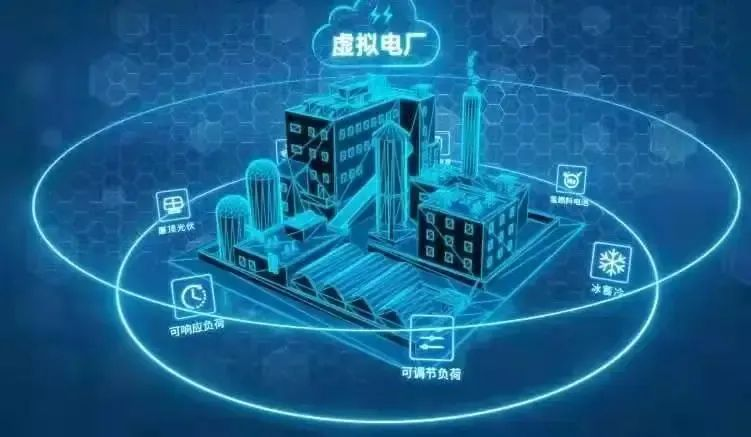
Traditional power plants generate electricity centrally and distribute it to millions of households, while virtual power plants are completely different - they have no towering chimneys or huge factories. Their core lies in the "intelligent brain" and "invisible network".
In simple terms, virtual power plants utilize advanced Internet of Things (IoT), communication technologies, and intelligent algorithms to "aggregate" distributed energy resources that are scattered across various locations and originally isolated, managing and operating them like a coordinated and orderly overall power plant.
2. How does a virtual power plant work?
(1) Perception and Connection
Intelligent devices monitor the real-time operational status of various distributed resources.
(2) Aggregation and optimization
The scheduling strategy is calculated by aggregating and analyzing massive and fragmented data through a digital platform.
(3) Response and execution
It can quickly lower the air conditioning temperature, suspend non-essential production lines, allow energy storage to discharge, reduce grid pressure, and achieve "peak shaving"; it can also encourage charging at charging stations during low electricity usage periods, or allow factories to increase production, to achieve "valley filling".
3. What is the value of virtual power plants?
(1) Enhance the stability and safety of the power grid
Effectively cope with fluctuations in new energy, alleviate peak pressure, and reduce the risk of power outages.
(2) Maximize the utilization of clean energy
Promote the consumption of distributed energy sources such as photovoltaic and wind power, and contribute to achieving the "dual carbon" goals.
(3) Reduce energy consumption costs
Users can participate in electricity market transactions and obtain additional income or save electricity costs through demand response, auxiliary services, and other means.
(4) Postpone investment in the power grid
By optimizing existing resources, we can reduce the need for building new traditional power plants and transmission and distribution facilities.
(5) Create new business models
Open up new value spaces for energy service providers, aggregators, users, and others.
4. Jinguan Stock's virtual power plant platform
Jinguan Stock has launched its self-developed virtual power plant platform, which integrates the Internet of Things, big data, and AI technology. This platform aggregates distributed energy resources in the form of an "invisible power plant" and restructures the energy management landscape. Serving as a "power resource manager," the platform aggregates distributed photovoltaic, wind power, V2G, energy storage devices, and adjustable loads, building an intelligent network where "source, grid, load, and storage" interact in a coordinated manner. This enables second-level scheduling and optimized allocation of power resources, providing systematic support for enterprise efficiency enhancement, grid stability, and carbon neutrality goals.
The platform provides a one-stop energy management solution tailored for high-energy-consumption enterprises and commercial buildings. By intelligently analyzing electricity usage data and dynamically optimizing strategies, it reduces costs. At the same time, as a "participant in electricity trading", it leverages modes such as electricity market trading and demand response subsidies to transform energy consumption costs into energy generation profits. Facing the challenges of "electricity shortage" during extreme weather and the integration of renewable energy, the platform enhances the grid's ability to accommodate fluctuating power sources through full-process digital coordination, peak shaving, and valley filling. It also provides services such as emergency power supply, frequency modulation, and peak shaving.
In addressing industry pain points, the platform utilizes digital collaboration across "source, grid, load, and storage" to tackle the challenge of new energy consumption. As an independent market entity, it opens up channels for users to participate in power system regulation, breaking the dilemma of "single electricity sales". Through diversified revenue models and digital empowerment, it drives the industry towards large-scale development.
Previous article:
"Small Ants, Big Future | Jinguan Shares Empowers New Energy Vehicles to Go to the Countryside"
Next article:New policy for waterway charging (or replacing) stations is implemented, with Jinguan's ship charging solution aiding shipping in cost reduction, efficiency improvement, and green, low-carbon transformation
Recommended News
-
2025-11-24
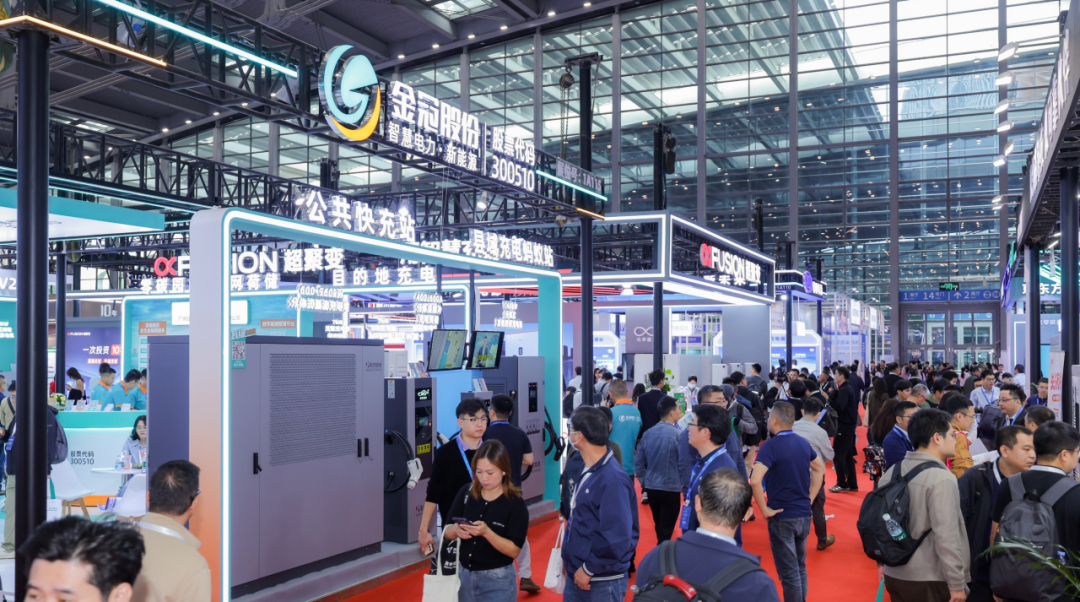
Jinguan shares made a major appearance at the Shenzhen Charging and Swapping Exhibition, with its multi-dimensional layout empowering the electrification transformation of the entire region
-
2025-11-10
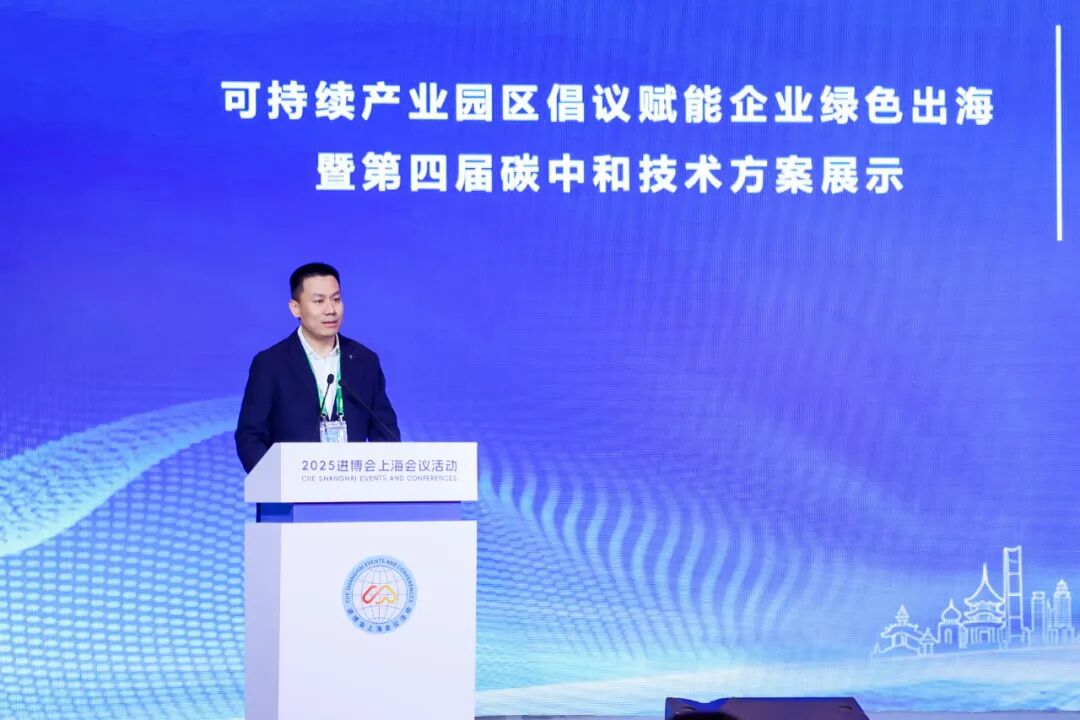
Jinguan Corporation attended an important supporting event of the China International Import Expo, discussing how zero-carbon technology empowers Chinese enterprises to go global in a green way
-
2025-09-19
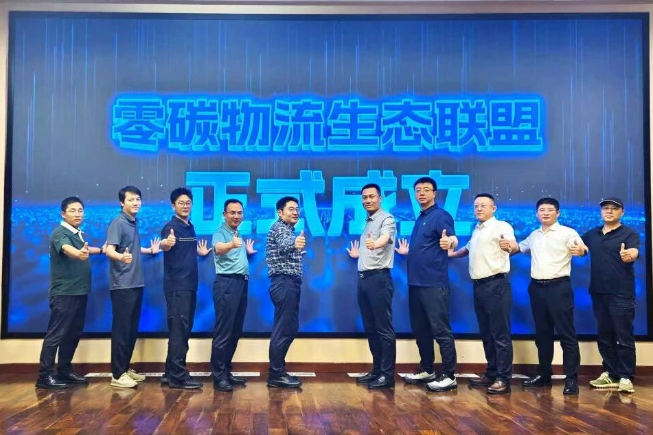
Invite logistics partners for win-win cooperation | The Zero-Carbon Logistics Eco-Alliance is officially established to jointly build a closed-loop service system for the entire electric logistics chain